
Unity of Nature
Natural philosophy at the turn of the 19th century
From a broad perspective, my research focuses on the challenges posed by the relationship between unity and diversity both in the natural and cultural worlds. I am particularly interested in the ways in which philosophers responded to the spread of scientific data accessible to educated audiences and to the consolidation of new scientific disciplines at the turn of the 19th century. Two key challenges of this time are at the core of my research: the problematic unity of inorganic and organic nature; the problematic unity of nature and human rationality.
I obtained funding for three projects related to this area of my research:
*Marie Curie Individual Postdoctoral Fellowship: Schelling’s Philosophy of Nature and the Environmental Challenge
*Postdoctoral Fellowship of the Flemish Research Foundation (FWO): The Contemporary Stakes of Schelling’s Non-Mechanistic Account of Nature
*KU Leuven Postdoctoral Mandate: The Kantian Elements of Schelling’s Philosophy of Nature.
I am also an affiliated researcher to the project Responses to Newton in the 18th Century, a collective project funded by the Flemish Research Foundation.
Publications related to these projects include: “From Kant to Schelling: Metaphysics of Nature and the Rise of Modern Science” (2024), “The Importance of Kant’s Schematism for Schelling’s Project of a Philosophy of Nature” (2024), and “Schelling and Röschlaub on the Concept of Life – At the Crossroads between Philosophy and Medicine” (2023) – see publications.
.
Is Philosophy a Science?
Metaphysics at the turn of the 19th century
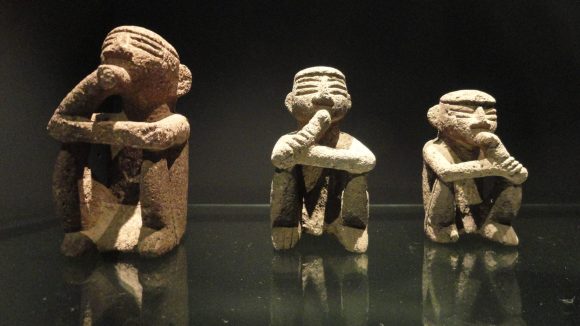
My work on natural philosophy is a development of my interest in the way philosophers perceived their own discipline and the task of philosophy at the turn of the 19th century. Is philosophy a science? If so, what kind of science? What is the task of philosophy and the philosopher? What is the relationship between philosophy and bodies of cognition irreducible to physics, such as life sciences, pedagogy, aesthetics, history, or religion?
I obtained funding for two projects related to this area of my research:
* Alexander von Humboldt Postdoctoral Fellowship: Fichte’s Quest of a New Language for Philosophy
* Special Funds for Research – Belgium (PhD): Fichte’s Philosophy of Philosophy
Publications related to these projects include: “The Missing Link Between Kant and Fichte: Ernst Platner’s Role in the Genesis of Fichte’s Genetic Method” (2025); “La réévaluation fichtéenne du réalisme” (2022); “Fichte et la puissante impuissance du langage” (2020); “Knowing, Creating and Teaching: Fichte’s Concept of Philosophy as Wissenschaftslehre” (2018); La philosophie comme Wissenschaftslehre (2018) – see publications.
.
Philosophy and Cultural Diversity
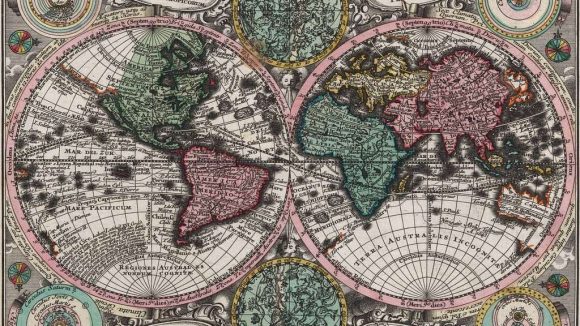
Parallel to my work on the philosophical reception of modern science and the question of whether philosophy itself is a science, I developed an interest in questions of cultural diversity. How did contact with new geographical and cultural ecosystems affect the production of philosophical concepts at the turn of the 19th century? How did philosophers respond to the challenge of incorporating geographical diversity into unified accounts of knowledge and history. Conversely, how have these accounts been received in different geographical regions of the world?
I obtained funding for one project related to this area of my research:
* Postdoctoral Fellow of the Coordination of Superior Level Staff Improvement (Capes-Brazil): A New Semantic Field for Knowledge
Publications related to these projects include: the edited volume currently in preparation German Idealism and the Question of Colonialism (co-edited with Pavel Reichl, under contract with Routledge); “Kant in Südamerika” (forthcoming); and “Only Anthropophagy Unites Us – Oswald de Andrade Decolonial Project” (2020) – see publications.
 Luis Fellipe Garcia